
Selector search
One pattern for every kind of selector.
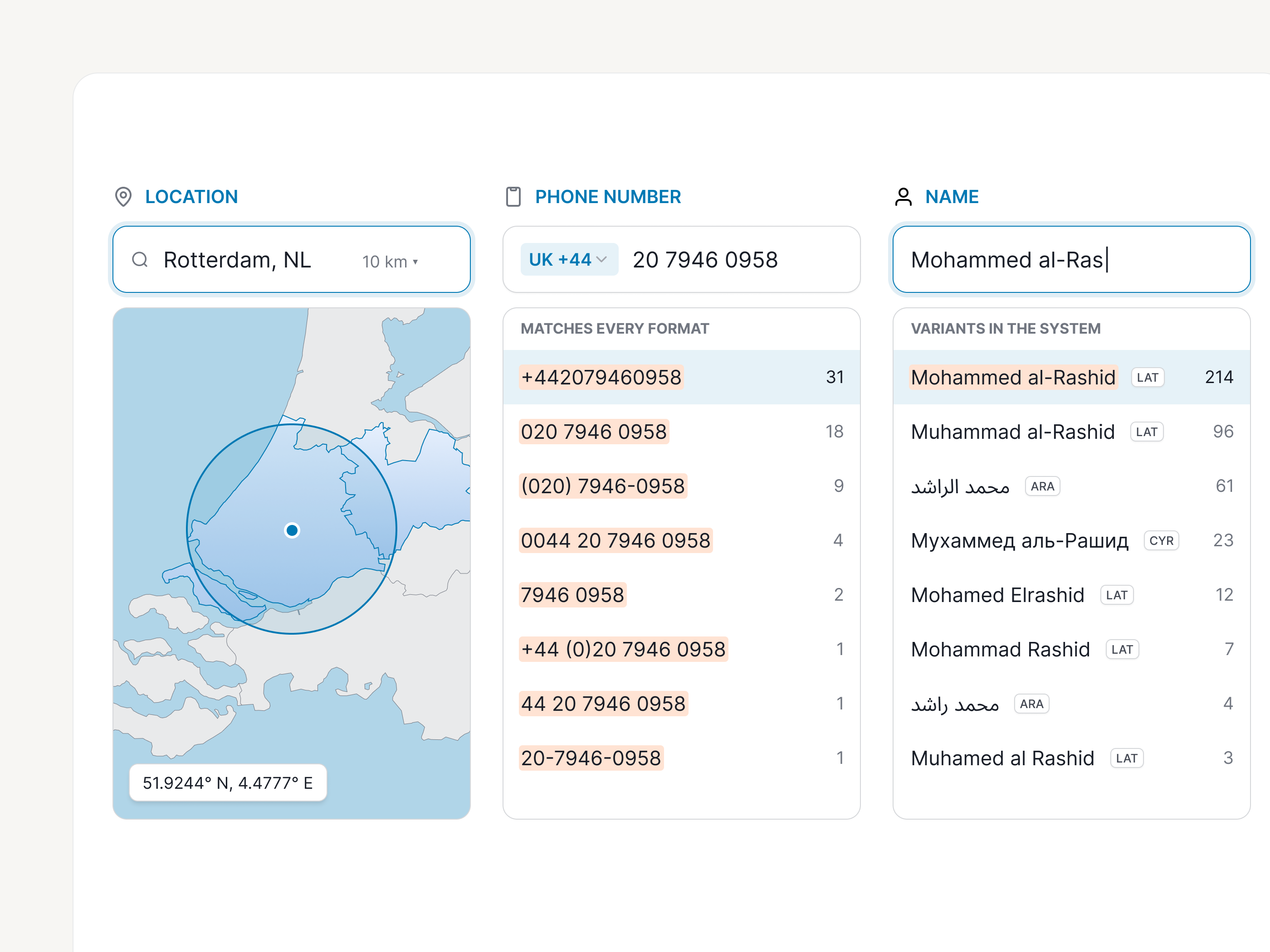
I designed one consistent search pattern for geospatial, phone number and cross-language name searches, so users who learn one search already know them all.
At a glance
- Problem
- Powerful searches for places, phone numbers and names were buried, so analysts rarely used them.
- What I did
- Turned three very different searches into one pattern, where only the input adapts to the data and the results stay the same.
- Result
- All three searches moved up front with one pattern to learn, and new search types can follow the same model.
01 / The problem
Three kinds of data, one product.
Analysts often search for a specific place, phone number or person. Locations, phone numbers and names are very different kinds of data, and each one needs its own kind of input.
Giving each its own interface would have fragmented the product and forced users to relearn search every time their target changed.
02 / Research
Powerful searches nobody could find.
The need came from two places: user requirements, and a large-scale analysis of how often each search filter was actually used.
The analysis showed a clear pattern. Some of the most targeted and powerful filters, like cross-language name search and phone number search, were rarely used. Analysts needed them, but the old system buried them where they were hard to find and easy to miss.
So the work had two halves: managing the data behind each search, and putting these searches in front of users the moment they arrive.
03 / How it works
Extraction does the heavy lifting.
Entity extraction automatically finds locations, phone numbers and names inside documents and stores them in searchable fields. That turned three different problems into one: every selector is a field users can search the same way.
Every selector also leads back to the same place. Locations, phone numbers and names all come from the original files, so each special search returns records, just like a regular search.
04 / Approach
One pattern, adapted only where the data demands it.
- 01
One pattern, three variations
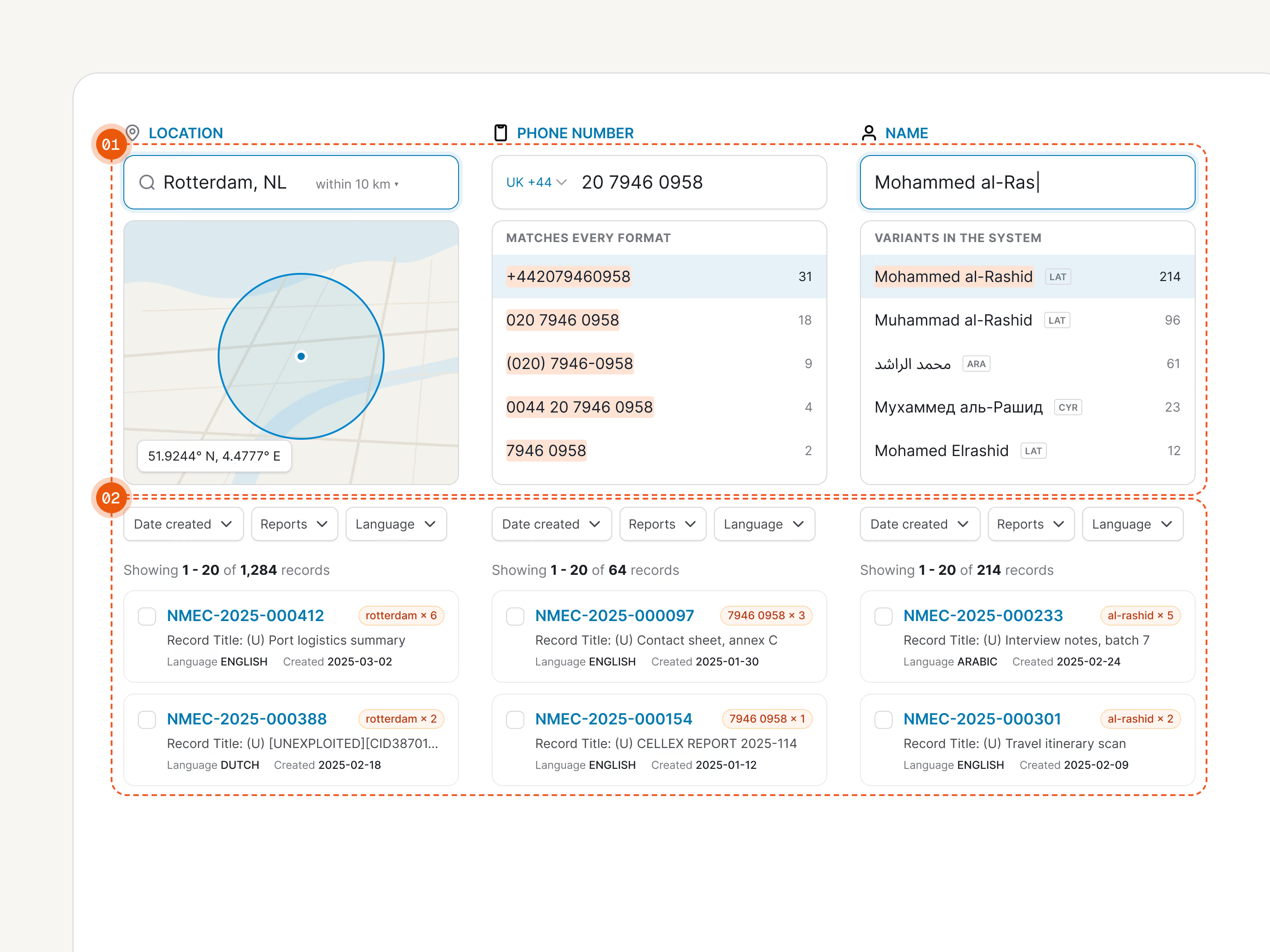
Every selector shares the same input, filtering and results structure, so it reads as one feature, not three.
- 02
Adapt only what the data requires
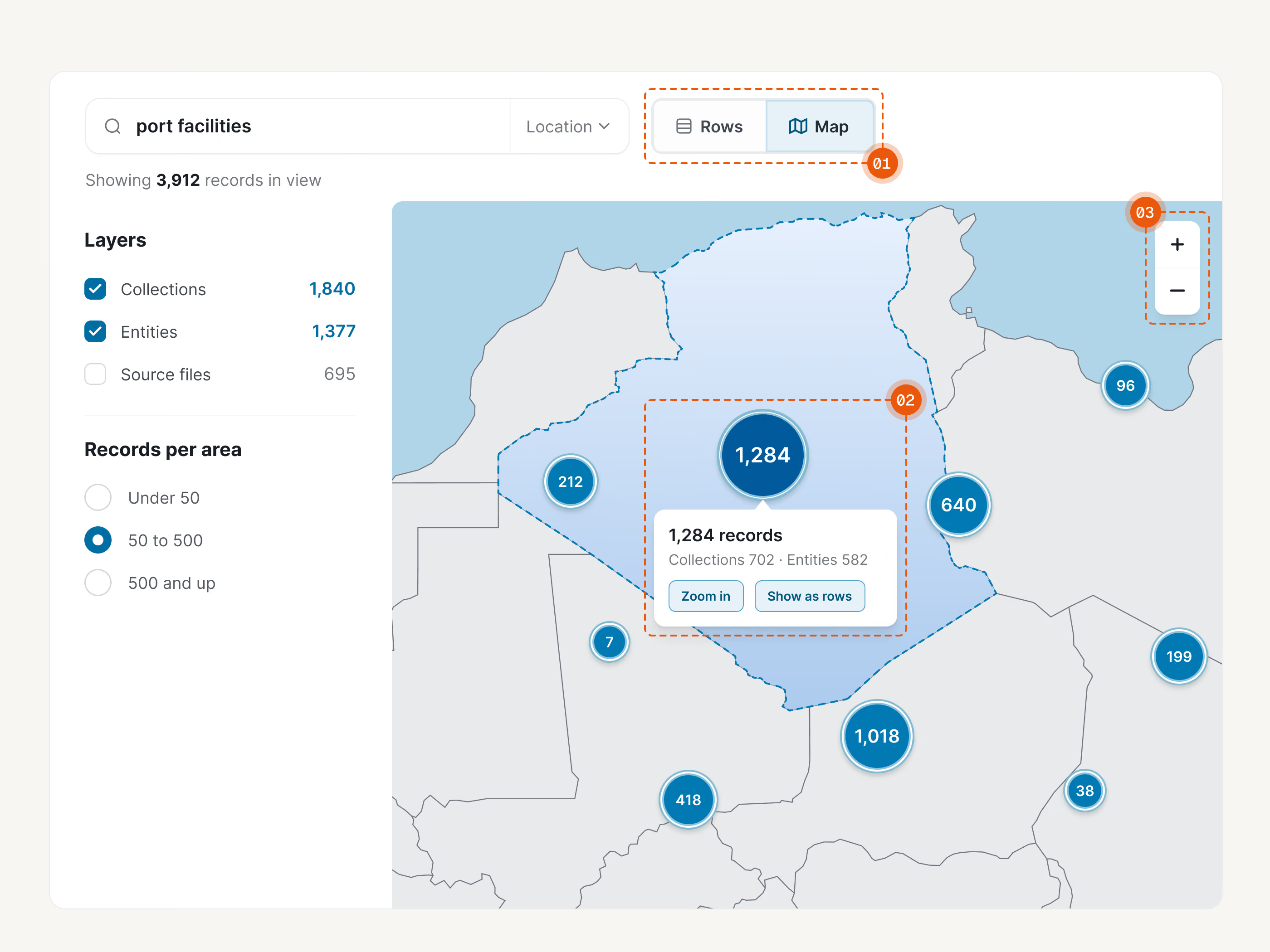
Geospatial search adds a map view beside the default rows. Results cluster on an OpenStreetMap map with a count of the records tied to each area, and users drill down by zooming in.
- 03
Names across languages
As a user types a name, variants appear from names already in the system, so every suggestion leads to a real record. They're ranked by Elasticsearch relevance and by how closely each matches the name's translation into other languages, mainly Arabic and Cyrillic.
05 / Key decision
A pattern, not three features.
The defining choice was to treat every selector as a variation of one pattern instead of designing three separate features. Because every search returns records, the results never change. Only the input and, for locations, the view adapt.
The cost landed on the backend. Locations, phone numbers and names are indexed very differently, so giving them one input type meant real technical work behind the scenes. That complexity stays in the system, where it belongs, so users only ever see a UI they already know how to use.
06 / Outcome
Learn one search, know them all.
Three specialized searches moved from buried to up front, sharing one learnable pattern. Once analysts could see them, they used them more, and new selector types can follow the same model as the product grows.
Targeted searches brought up front: geospatial, phone number and name
Pattern to learn
07 / What's next
Measure what visibility unlocks.
A usage analysis started this work, and it should drive the next round too. I'd track how often each search is used and whether it leads to a record someone opens, so future changes rest on the same kind of evidence.
The pattern is also ready to grow. Entity extraction already finds organizations, facilities and equipment, and each could become a new search that users already know how to use.